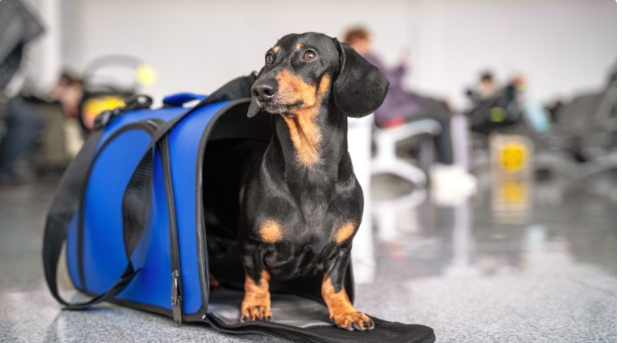

In this growing market and trend toward greater pet ownership, airline carriers have begun adapting their travel policies in an effort to appeal to traveling pet owners. In the past, pets were generally excluded from travel by airplane; in fact, even in recent years this market was one of the more specialized travel industries. Today, however, cabin travel is available for smaller breeds of dogs and cats by several carriers, which demonstrates a more open-ended perspective that pets are a valuable member of a family, and therefore they should be included in traveling plans. Many airlines have even established policies for “pet travel,” where animals can fly in the passenger cabin if they are small enough to fit under the seat, are at least eight weeks old and healthy, and their carrier can be stowed safely. In particular, Air Canada, Delta Air Lines, Lufthansa, United Airlines, TAP Air Portugal, and French Bee, have all updated their travel policies in an effort to cater to pet owners.
Why Pet Travel Is Becoming More Popular
Growing numbers of pets are traveling with their owners, largely due to changes in lifestyle and patterns of living. People are more likely to work at home and away from office for several months or even move overseas. They would rather bring their pet along rather than leaving it to the care of friends, family, and animal boarding institutions.
The emotional connection people share with their pets is also another crucial element. Dogs and cats are widely seen as members of the family and separation can be painful. For a lot of travelers, the presence of their pet may also provide security, companionship and relieve anxiety. It is demand that pushes airlines to re-examine their policies and to establish new traveling services that suit travelers who bring pets.
Industry analysis indicates that travel involving pets is becoming a key area of focus and growth. The offer of pet-friendly facilities or service has become one of the main methods for airlines to win over potential passengers who might consider other transportation options or select alternative airlines.
Airlines Expanding Cabin Pet Policies
Major airlines are now allowing pets to ride in the main cabin, but the requirements for each airline differ. Generally speaking, small dogs and cats are the types of pets allowed. These pets need to travel in approved airline carriers, and their carriers need to be able to fit underneath the seats in front of the traveler.
Examples of airlines that now permit animals in the cabin under certain guidelines include Air Canada, Delta Air Lines, Lufthansa, United Airlines, TAP Air Portugal, and French Bee. Many airlines requiring pets to be in the cabin need reservations in advance of the traveler’s flight, because space for animals onboard typically is limited.
The increase in the airlines’ adoption of pets is also seen as a sign of the airlines’ efforts to make travel easier and more accommodating to travelers’ varying preferences. Given that the airline industry is such a competitive market, accommodating travelers’ needs for bringing their pets along also proves to be a good selling point.
It is recommended to look into an individual airline’s policies before booking their flight; restrictions vary greatly between airlines on carrier dimensions, fees, health certifications, and which destinations are available for pet travel.
Understanding Airline Requirements for Pets
Despite the increasing allowances of airlines, the travel of animals is still fairly strictly controlled to ensure the safety and well-being of animals as well as the comfort of other passengers. A number of requirements usually are in place before an animal is permitted to travel, with the most typical one involving the use of an airline-approved carrier. Animals often need to stay in the carrier for the entire trip, with carriers often having to fit under a seat on the plane. Generally, airlines need animals to have adequate ventilation and enough room to stand, turn around, and lie down. Animals usually must have met a certain age requirement. Although certain airlines will permit puppies and kittens at the age of 8 weeks, many have set the age at 12 weeks. Young animals might be physically unfit for air travel. Furthermore, travelers are usually asked to present health, vaccination, identification and destination documentation, as well as evidence that all destination specific regulations have been met. Traveling overseas usually brings with it added requirements including import permits and veterinary tests. All failed requirements can lead to refused travel for animals, so being prepared in advance is vital.
The Difference Between Cabin and Cargo Travel
For pet owners traveling with their pet(s), there are basically two travel plans they could take for the pet; either the pet travels on board with the owner or it gets shipped by cargo. Ultimately, this depends on the animal’s size and weight, along with airline guidelines.
Traveling with the pet in the cabin is generally more desirable to pet owners, because owners are in proximity with the animal for the duration of the flight. An owner can check on the pet, helping to alleviate stress from both owner and animal. This method is safe for smaller dogs and cats that are small enough to fit inside the airline specified carry-on carrier.
Cargo shipment is generally reserved for large pets that would not fit into the prescribed cabin carrier. Airline cargo compartments are well-pressurized and temperature-controlled for animals being shipped. Nevertheless, many owners are still apprehensive to ship animals as cargo due to separation concerns and that pets may become distressed while traveling in unfamiliar environment.
Service Animals and Emotional Support Animals
Typically, airlines differentiate between pets, service animals and emotional support animals. It is a good idea to know the distinction when traveling with an animal.
A service animal is trained to do tasks to benefit individuals with disabilities. Examples include a guide dog for the blind, a medical alert dog for an epileptic, or an assistance animal that can help a person stand. They have specific rules and allowances due to their important role.
An emotional support animal, while important, usually doesn’t have the same legal recognition as a service animal. In the past few years, most airlines have reviewed and changed their pet travel policies, to consider an emotional support animal as a pet. The animal then needs to be transported according to general pet guidelines, including being contained within the carrier.
The division is increasingly becoming important as airlines try to find a balance between convenience, accommodation, passenger comfort and airline safety.
Challenges Associated with Pet-Friendly Flights
While many travelers appreciate increased pet accessibility, bringing animals on flights can also present its difficulties. It is vital for airlines to be sensitive to both the pet-owners and the other travelers on the flight. The former often face limitations and a higher risk of cancellation, while other travelers can be sensitive to the smell, sounds, or sight of animals. There have also been several cases of allergic reactions to pet dander. In order to compensate for these potential difficulties, airlines often limit the number of pets on a flight, along with many regulations concerning pet behavior and carriers. Flight attendants are trained to deal with pets and passengers traveling with them, creating an atmosphere as comfortable as possible. Transparent policies, as well as constant communication with passengers and staff, helps ease some of these problems. As the travel with pets’ trend increases, airlines will most certainly adjust their procedures accordingly.
Preparing Your Pet for Air Travel
Experts advise thorough preparation before traveling by air with a pet. Before a flight, an owner needs to book a visit with the veterinarian to check that the pet is in good health for the flight, has adequate vaccinations, and meets airline requirements. The pet should get acclimated with the pet carrier prior to the flight by spending time in the carrier the weeks prior. The owner must also pack any needed necessities for the pet including food, water, any prescribed medication, ID tags, and a comfort object. Planning on arriving early will allow for proper documentation check-through and allow for any complications. By considering your pet’s temperament you’ll be able to assess your pet’s stress levels. Some animals can adapt readily to new places and busy environments but for others a busy terminal will prove extremely overwhelming.
The Future of Pet-Friendly Air Travel
Given the growth trend, the air industry should continue to develop and strengthen their services for our four-legged friends. Industry observers suggest that pet friendly services, such as airports with relief areas for pets, more simplified reservation system for traveling with a pet and additional accommodations for pet travel will continue to be improved and developed.
Technological developments in pet carrier designs and pet transport service may bring more comfortable and safety travel conditions. At the same time, the relevant regulators and air lines will keep trying to achieve the balance between passenger comfort, animals’ well-being and their operational needs.
With the increase in people taking their pets on trips, it is expected that pet friendly air travel will likely remain a strong trend in the future. For the millions of pet lovers worldwide, the ability to travel with their pets in their planes has long been an aspiration and it demonstrates the human animal relationship.
Conclusion
Over the past decade there have been significant changes to how the airline industry has dealt with travelling with pets. As more passengers demand their animals are not left behind while they travel for holidays, moving, or simply travel long-term, the airlines are continuing to introduce more flexible cabin allowances and services.
The individual regulations may differ between airlines but it is undeniable that the trend is well and truly moving forward. This can only provide an increasing amount of freedom, convenience and ease of mind for travelers who see their animals as one of the family when they plan their next trip.