

Introduction: A Growing Debate in the Insurance Industry
With more frequent, devastating and expensive natural disaster events occurring globally, the catastrophe insurance market is feeling more intense pressure, driving an increase in premiums in many areas, creating a crisis over insurance affordability and availability. But a review by insurance professionals and recent research indicates that ever-increasing premiums alone will not deliver long-term stability to the industry and other approaches like building resilience and mitigation must play a central role in creating a sustainable blend between risk management and affordability. Underpinning the disaster premium increases is not simply a rising price tag, but also an increasing clustering of risk. As extreme weather event frequency and magnitude increase as a result of global warming, the industry is questioning how risk is assessed, valued, and ultimately shared between private sector reinsurers and insurance providers, the government, and property owners.
Rising Catastrophe Losses Are Reshaping Insurance Markets
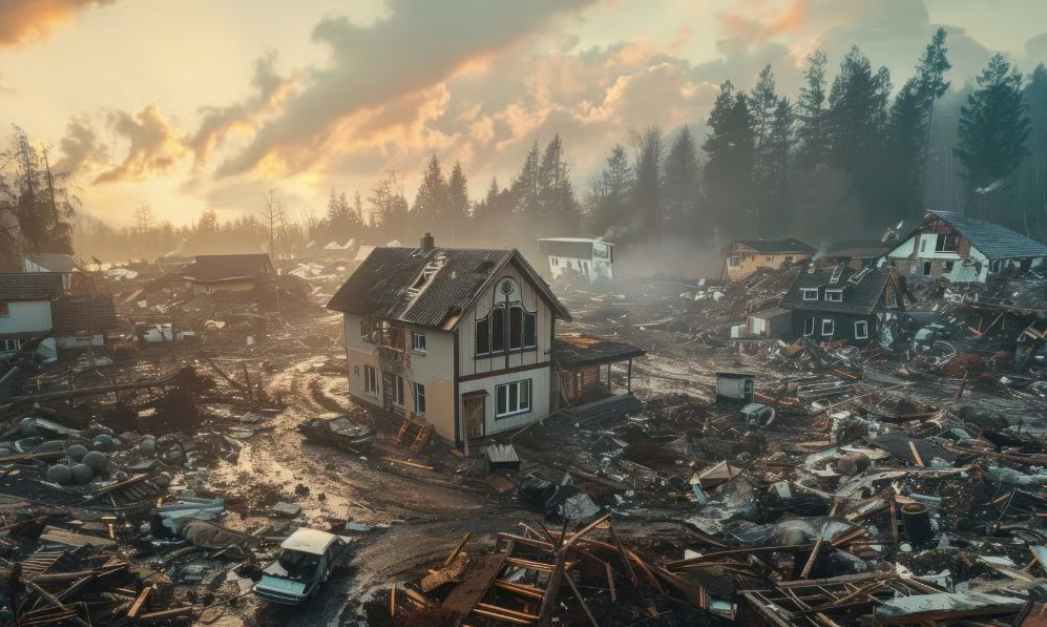
Insured losses from natural catastrophes (floods, storms, wildfires and hurricanes) have grown considerably in the past decade. Today they are not viewed as the “rare, isolated and sporadic events” that they once were, but as a constant and increasing element of risk. More and more frequently, total insured losses from many small and frequent events are dwarfing claims arising from large, one-off catastrophes. This has led to increased pressure on insurers and reinsurers to adequately fund their operations through premiums to cover growing claims, while remaining competitive in their market. Simultaneously many regions have witnessed declining availability and affordability of insurance, and particularly so in climate-vulnerable regions that bear concentrated climate-related risks. Insurers are reacting through a range of measures; increasing premiums, tightening underwriting practices, increasing deductibles and exiting some of the most risk exposed markets entirely. While necessary for insurer solvency these trends have implications for the affordability and accessibility of cover for home owners and business owners.
Why Simply Raising Premiums Is Not a Sustainable Solution
Premiums alone can’t tackle the root causes of escalating catastrophe losses. The fundamental of insurance pricing is that price should correlate to risk, therefore as exposures increase in a location exposed to disaster, so must the price of insurance cover for that location. However this may not work in the event that the exposures become very highly correlated across broad geographical areas.
In instances such as widespread exposure to floods, fires or storms there is no ability to diversify risk among the insurance pool. The pooling effect becomes insignificant, the premiums become more volatile and costly and potentially insurers may decide they will offer no cover at all.
The result is a scenario where as premiums become more expensive, people may be less likely to take up insurance, thus becoming exposed to risk when an event does strike, and thus reducing the general stability and resilience of the insurance market.
The Role of Risk Reduction and Property Resilience
Physical resilience is becoming the cornerstone for stabilizing insurance markets, as a range of evidence suggests that reduction in physical exposure to losses is the most powerful means of managing the market after price corrections are no longer the only policy tools. Such efforts include strengthening building codes, sensible land-use zoning, flood barriers, fire-resistant building design and community-based mitigation. This protection not only shields owners from excessive losses but also enhances the insurability of the whole area. When the risks are lessened, the market can offer insurance coverage at affordable rates and prevent providers from withdrawing their services in areas which, despite high exposures, had no other alternative but this kind of protection.
Adaptation as a Long-Term Strategy for Affordability
Increasingly, adaptation measures are viewed as integral to the future of property insurance. While a variety of responses will undoubtedly be necessary, many analysts believe that investing in reducing the risk is a more sustainable alternative to government intervention solely in controlling growing premiums. Insurance risks are reduced when buildings are built or retrofitted to withstand extreme weather. This enables insurance carriers to assess risks more accurately and the probability of abrupt increases in prices after significant disasters is minimized. Wider insurance participation is a benefit as it enables a greater sharing of risk. In many areas, insurers are already incentivizing or mandating protective measures for property insurance eligibility, indicating that risk reduction, instead of subsidization or premium controls, will increasingly be tied to insurance prices.
The Challenge of Climate Change and Expanding Exposure
One of the biggest reasons for increasing catastrophe losses is global climate change. It has led to an increasing number of intense storm events and has put “pressure on insurers”. However population growth and urban sprawl are expanding into disaster-prone regions such as coastal regions, areas subject to wildfires and floodplains.
The combination of the increased exposure and severity of hazards, is putting “structural pressure on the global insurance sector”. With traditional premium models becoming inadequate for well-capitalized insurers in regions where losses are becoming more numerous and severe, insurers are having to focus on the sophisticated catastrophe modeling and more forward-looking risks. Catastrophe models forecast future conditions, however there is a great deal of uncertainty regarding how climate will change.
The Role of Public Policy and Insurance Innovation
The problem of rising protection gaps is becoming an issue of government and regulatory concern. In most instances, public-private partnerships are being formulated to maintain access to cover in high-risk locations. These combinations of mechanisms use insurance instruments together with investments in resilience and regulatory support for risk-based pricing.
At the same time, insurers are devising new product structures where, through premiums based on reduced risk, owners of properties satisfying certain resilience characteristics receive rewards in terms of reduced insurance rates. These initiatives encourage financial incentives that match risk reduction initiatives for sustainable insurance development.
Nevertheless, experts caution that deliberately pushing down rates without actually reducing the risk may produce market distortions, where in the worst case, some insurers might choose to withdraw completely, making cover less available and placing a greater burden on public relief programs.
Conclusion
Insurance against catastrophes will not be driven by consistently rising premiums, but rather by efforts to lower the cost of risk. Although necessary in a risk-based market, premiums alone cannot create market sustainability.
Both history and the present indicate that increasing resilience is the most efficient course forward. The costs associated with disasters can be dramatically lowered through hardening building standards, bolstering infrastructure and making better land-use choices. When partnered with insurance systems designed with consideration for these factors, the price and availability of catastrophe insurance can be maintained.
Rather than rising premiums to cope with the risks, lower property risk is the sustainable solution for cat insurance in a world of increased uncertainty.