
Taiwan has declared that it is a sovereign and independent state, following a warning from U.S. President Donald Trump not to officially declare independence from China.
Trump’s statements came after a two-day summit in Beijing, after which he said he had “made no commitments in any direction” regarding the self-governing island, which China considers part of its territory and does not rule out using force to bring it under control.
After talks with Chinese President Xi Jinping, Trump also said he would soon decide whether to approve an $11 billion arms package for Taiwan.
The U.S. administration is legally required to provide Taiwan with means for self-defense, but it has often tried to balance this support with diplomatic relations with China.
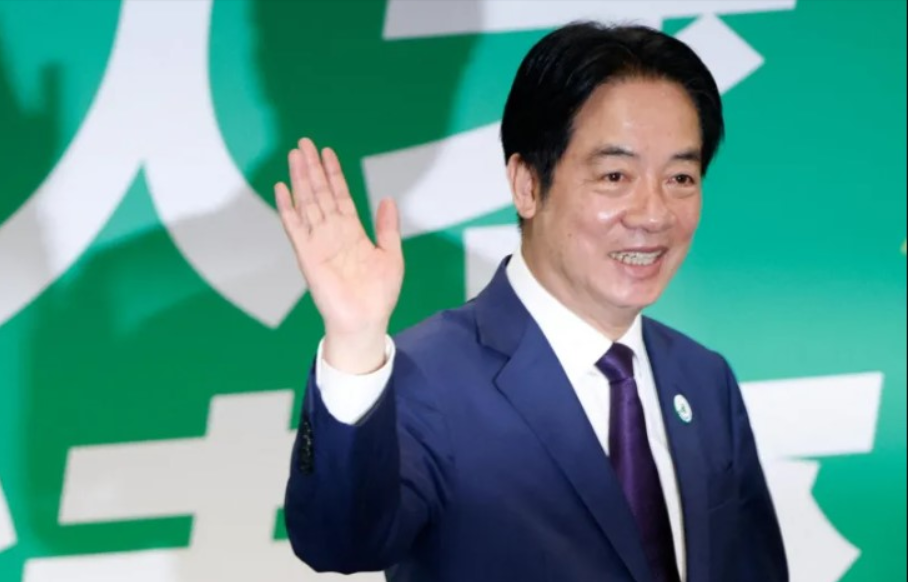
Taiwan’s President Lai Ching-te previously stated that Taiwan does not need to declare official independence, as it already considers itself a sovereign state.
On Saturday, presidential spokesperson Karen Kuo said it was “self-evident” that Taiwan is “a sovereign and democratic independent country.”
She added, however, that Taiwan remains committed to maintaining the status quo with China, under which the island neither declares independence nor unites with China.
Many Taiwanese consider themselves part of a distinct nation, although the majority support maintaining the current situation.
The U.S. position is that it does not support Taiwan’s independence, while relations with Beijing depend on the acceptance of the principle that there is only one Chinese government.
In an interview with Fox News after meeting with Xi Jinping, Trump reiterated that U.S. policy toward Taiwan has not changed but stressed that he does not seek conflict with Beijing.
“I’m not for anyone declaring independence,” he said.
“We are required to travel 9,500 miles to fight a war. I don’t want that. I want the situation to calm down. I want China to calm down.”
During his flight to Washington, Trump told reporters that he had spoken “a lot” with Xi about the island but refused to say whether the U.S. would defend Taiwan in case of conflict.
Xi “is very determined” about the island and “does not want moves toward independence,” Trump said.
Beijing has repeatedly expressed its opposition to the Taiwanese president, whom it has previously called a “troublemaker” and a “destroyer of peace in the Taiwan Strait.”
China has increased military drills around the island in recent years, raising regional tensions and testing the U.S.’s diplomatic balancing act.
Trump said the upcoming arms package would be discussed with Taiwan’s leadership
He added, “I need to speak with the person currently leading Taiwan.”
The U.S. does not have official diplomatic relations with Taiwan but maintains significant unofficial ties. American presidents usually do not communicate directly with Taiwan’s leader, as this could severely strain relations with Beijing.
“We are grateful to President Trump for his continued support for security in the Taiwan Strait,” said the Taiwanese presidential spokesperson.
“Taiwan will deepen cooperation with the U.S. to achieve peace through strength, ensuring that peace and stability in the Taiwan Strait are not threatened or undermined, which serves the shared interests of Taiwan, the U.S., and the global democratic community.”