
A Rescue Story That Touched Millions Around the World
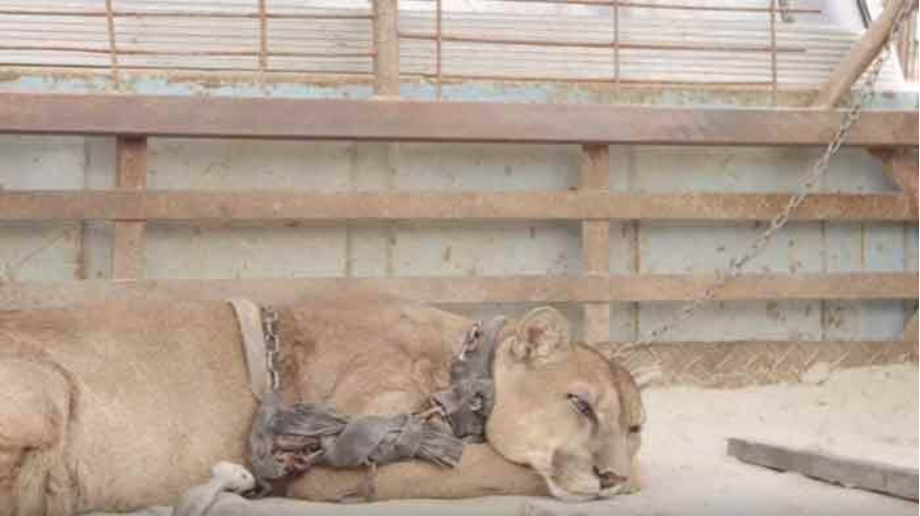
Freedom is the one true luxury of the animal kingdom and for most wild creatures it is nothing short of essential. But for a lion named Mufasa, his only experience of freedom was to come at the very end of his long life. After twenty years of suffering life chained to a pole as part of a traveling circus in Peru, the old lion has finally been freed and returned to the wild.
News of Mufasa’s rescue has touched millions of animal lovers worldwide and videos of his incredible first steps to freedom have been watched over 2.4 million times, proving how much compassion there is for all the world’s circus animals and how life-changing rescue can be. Experts have stated that Mufasa’s story brought global attention to animal welfare in the circus.
A Life Spent in Captivity
Mufasa’s life couldn’t have been further from what is natural for a wild cat. For approximately twenty years he lived in the control of a travelling circus that toured regions in Peru. For most of this period it is said that he spent his time in the back of a pick-up truck, chained up to incredibly heavy chains and chained tight, meaning that he had no freedom to express any kind of normal behavior and had no room to move around freely.
The Mission to Save Mufasa
Animal Defenders International (ADI) helped make Mufasa’s rescue possible. The group works with governments and law enforcement agencies to combat the abuse and exploitation of animals. Mufasa’s rescue occurred during a wider initiative to enforce the Peruvian ban on the use of wild animals in circuses. Although passing the law was a major win for animal rights, enforcement and the whereabouts of animals still being used in circuses took some time.
It took months to track down the animals who remained in circuses, and some accounts say the release of Mufasa involved difficult and protracted negotiations and legal work until authorities finally intervened and seized the lion.
To those involved in the rescue, Mufasa was an icon and represented the plights of many wild animals forced to perform for the amusement of people for years. His rescue marked one of the highest points of the campaign.
The First Steps Toward Freedom
By the time of his release, Mufasa would discover what he had missed for the majority of his life: the experience of freedom and being without any restraint.
Rescuers documented his brave venture out, showing the aging lion tentatively trodding around his new home; the first time Mufasa could feel natural ground beneath his paws and venture into nature as only wild animals should know it for decades.
The moment was described as heartbreaking and joyous, in part, for showing the magnitude of the amount of his life Mufasa was deprived of. Nevertheless, Mufasa’s first tentative steps into the grass and trees captured images that were widely shared across media.
Animal activists said they saw it as a symbol that is a win for both Mufasa and the movement against animal exploitation.
Life in a Sanctuary
After being rescued, Mufasa was taken to a sanctuary where he would live out the rest of his days away from the circus, enjoying the benefits of an enclosure with open space, vegetation, and caring staff dedicated to his well-being. Although already aged and ailing from the effects of aging and long neglect, he was provided with proper care and a healthy diet and received Veterinary attention to give him as much comfort as possible during the remaining months of his life, allowing him to live without forced performance or constraint for the first time in decades. Animal welfare specialists explain that such sanctuaries are important because many rescued circus animals are unable to cope with a life outside confinement. Mufasa spent his final months in peace at the sanctuary.
A Freedom That Came Too Late
Although it brought so much happiness when Mufasa was rescued, he was only free for a short period of time. Just a few months after he was released from captivity the lion succumbed to a variety of health problems including kidney failure and age-related conditions resulting from his many years in captivity and the tough life he endured before rescue.
Mufasa’s passing touched many who were aware of his story; however, those who had helped to rescue him were pleased they were able to give him a life free from confinement, filled with compassion and dignity before his life ended. The alternative was a life still locked in shackles and people eager to look after his needs.
Even though Mufasa only spent a few months in the sanctuary, the change in his life could not have been more drastic.
The Growing Debate Over Animals in Circuses
The tale of Mufasa has been central to debates on wild animals in circuses. Animal rights activists say that circus environment does not fulfil the species specific physical and mental requirements of lions, tigers, elephants and bears.
Over last 20 years, many countries have either legislated against the use of wild animals or completely prohibited their performance in circuses. Those in favor of banning argue that wild animals should not be confined and transferred just to entertain people performing them.
Consumer perceptions are changing and a large section of the public now prefers entertainment without performing animals. This has led many circuses to metamorphose into entertainment centered around acrobatics, theater and man rather than animals.
While some areas still debate this issue, the worldwide move to implement welfare considerations of wild animals seems to be well underway.
Public Reaction and Lasting Legacy
Video clips of Mufasa being rescued continue to be shared even today, years after he has passed away. For many watching the video, Mufasa’s story serves to emphasize the strength and capabilities of animals and the need to uphold our human duty to protect them. Discussions online of Mufasa and other animal rescue stories commonly feature statements of outrage against the use of wild animals in circuses and evidence that such incidents prove the need for stronger regulations in the future. The general sentiment towards stories of wild animal rescue tends to be one of conviction that such creatures should remain in the wild or in special preserves and not used for human amusement. Mufasa’s story is now hailed as one of triumph within the animal welfare movement. It may be impossible to turn back time on the many years he was kept in captivity, but the fact that Mufasa was rescued in the end is testament to the fact that government, welfare organizations, and humans can all be part of change and contribute to the welfare of the animals we care about.
Conclusion
From being chained up to being set free, Mufasa’s life has been one of the greatest animal rescue stories from the past few years. For twenty-four years Mufasa was confined to a circus, chained and dragged to each location. Then one day he was set free into the wild he never had, to experience the wild he never knew he ever should have known.
His freedom lasted only until he went to take a look for the very first time and walk on what real grass felt like under his feet. Although this was very short of a moment, Mufasa’s story has now inspired people all over the world about captive animals, animal welfare and the welfare of organizations to put a stop to animal suffering.
I think most people will know Mufasa forever as the animal that was set free but I don’t think they would ever know the animal that was in chains for twenty-four years.