

A Strange Discovery Hidden in Plain Sight
What seems to be just regular old frozen dirt, or even animal poop, has actually turned out to be one of the most significant scientific discoveries made in years. The reason? Researchers have taken samples of ancient North American permafrost and discovered ancient DNA from hundreds of species in what was found to be thousands of years old squirrel poop.
To the naked eye, samples of fossilized rodent poop do not appear remarkable. But, when DNA was extracted from these pellets of fecal matter, it was discovered that the samples were a rich and detailed snapshot of Ice Age life. The animal DNA contained within these samples included information on hundreds of mammals, plants, insects and even microbes. The discovery is causing us to rethink ancient worlds and this surprising new source is opening a whole new door to analyzing the past.
How Squirrel Scat Became a Natural Time Capsule
What makes these droppings so interesting is the place they were found; the environment they are stored in is extremely unusual. The cold Arctic soil in parts of the Yukon territory, Canada, has kept the samples below freezing temperatures for many thousands of years, locking in organic matter.
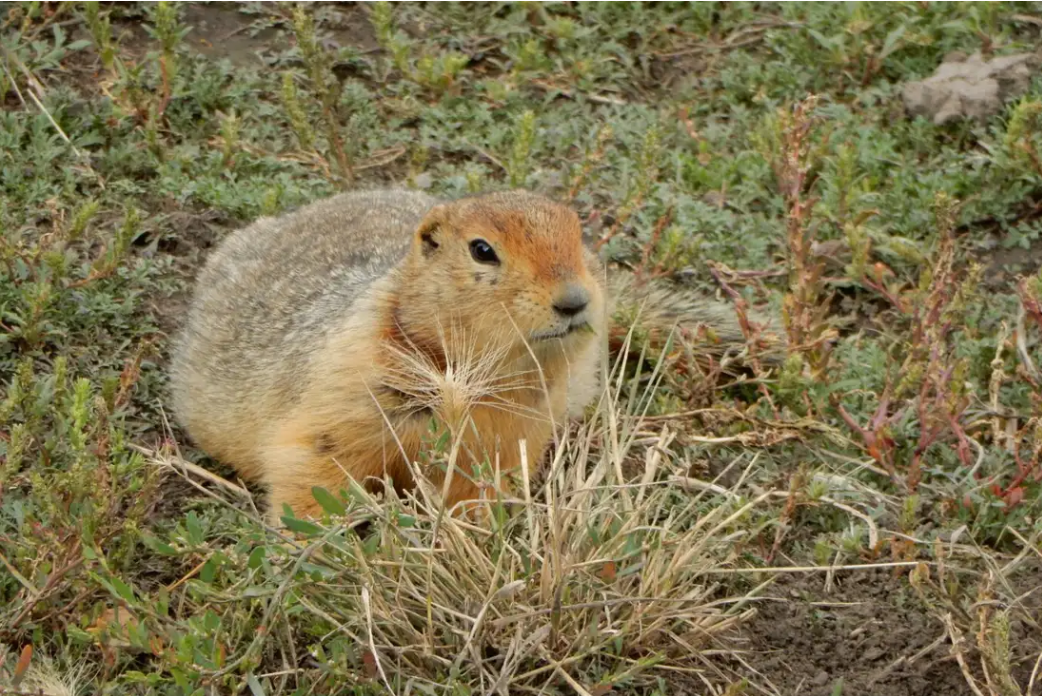
Surprisingly the Arctic ground squirrel has helped to store this ancient material. Arctic ground squirrels’ tunnel in to the earth, and burrow in to them, to produce chambers in which they will live for long periods of time in which they store food in. Their burrows have accumulated a large amount of biological matter such as; plant matter, bones, seeds and excrement over this period.
As the burrows have become enclosed by the frozen permafrost they have trapped in the ancient material in an archive of natural ancient DNA which would not have decomposed for many hundreds of thousands of years.
The scientist has labelled these burrows as biological time capsules.
What Scientists Found Inside the Ancient DNA
DNA was then extracted and sequenced from the frozen scat samples and the results were completely unexpected. This did not comprise single species or even a single group of life but rather an ecosystem in existence before being preserved in time.
Large Ice Age animals were identified like mammoths, horses and an extinct bison. This also showed evidence of large predators that are no longer in the region, such as wolves and cats, along with traces of hundreds of plant species. This demonstrated that the landscape was much more diverse than scientists ever thought. Micro-organisms and insects were also identified proving very high-resolution information about the time frame. It is not often that an archeological site shows this much diversity in one sample.
Why Squirrel Behavior Makes This Possible
But it is not only environmental conditions that are favorable; a part of it has to do with the behavior of Arctic ground squirrels themselves. The ground squirrels are not passive members of their surroundings; they gather things up and store them inside their burrows.
Squirrels bring into their burrows plant seeds, other plant materials, bones, other animals, etc to line their nests or to store them for future food. Accumulating over long periods these biological materials create a dense paste which, due to the freezing temperatures of the burrow, are very well preserved.
This process of accumulation has been likened to that of other natural collectors; each burrow being an archive to the lifeforms of that surrounding area. This is especially so with the ground squirrel due to their habits of frequent use and modification of their burrows, meaning they create a multilayered archive of their history.
This process, combined with the condition of permafrost, makes squirrel burrows one of the richest sources of ancient DNA known to man.
A Breakthrough in Ancient DNA Research
Historically, ancient DNA had to be obtained from bones, teeth, or other preserved tissue. However, these materials are scarce and generally degrade over time. The realization that DNA can be recovered from feces for thousands or even millions of years has opened up an entire new area of science. Using eDNA from both sediments and excrement, scientists can now create a picture of ancient environments without needing a fully intact fossil. The Arctic has been an important research area as permafrost naturally preserves genetic material extremely well. Sometimes the DNA within fecal material has been found to be better preserved than that in bones, contradicting traditional assumptions about the survival of ancient DNA. Many other permafrost sites, which were not considered important at the time, are now being studied to find out if they are another source of unknown DNA.
What This Means for Understanding Ice Age Ecosystems
With the ability to recreate whole ecosystems from a miniscule sample of DNA, the way in which the past is studied is changing. No longer are scientists only able to study species based on isolated fossils, but a multitude of life forms that co-existed in the same environment can be identified.
Using this method, a fuller and more interactive study of Ice Age ecosystems is possible. Researchers are able to view the species interacting and a picture of the food webs, as well as climatic and environmental changes that took place.
A predator-prey relationship between mammoths and wolves could be deduced from a single sample due to the species of both herbivores and predators. Also plant DNA would tell us how plants altered with periods of time and climate.
Such knowledge is very useful when we consider how ecosystems change with a changing climate, in the past, and how they will react in the future.
Why This Discovery Matters Today
This research may shed light on past ecosystems; however, it has implications outside of the field of paleontology. The way in which species respond to climate change has been observed in the past and could give scientist’s an indication as to how current ecosystems will respond to environmental change.
The Arctic is warming at a greater rate than almost anywhere on Earth and it is important for the study of climate change. The existence of ancient DNA in the permafrost gives an indication to the past state of species as it can be compared with species of the present day.
The existence of these ancient DNAs in permafrost highlights how important it is for us to protect these environments as the permafrost is beginning to thaw at a faster rate due to global warming and once this has gone the DNA could be gone forever.
The Future of Ancient DNA Science
This finding contributes to a rapidly expanding field, incorporating genetics, ecology and climate science. Increasingly sophisticated methods are now being developed to recover minute traces of DNA from the environment, and in the future may lead to even more detailed analysis and, possibly, to descriptions of novel species, clarification of migration patterns, species evolution and extinction. The use of environmental DNA is expected by researchers to become a principal tool in understanding Earth’s past biodiversity.
Conclusion
What started off as simple droppings from a frozen squirrel, has been hailed as one of the most important discoveries ever made on the life that existed long before humans. DNA has been recovered from hundreds of species through the miniscule samples that are providing the public and scientists alike, a peek into the life of hundreds of thousands of years ago.
This discovery indicates that even the smallest evidence of life can still mean a wealth of information for the sciences. It is thought that further investigations into areas of permafrost could bring to light many more hidden histories.
In short, the past droppings are a fascinating record of Earth’s past, preserved perfectly and frozen in time.