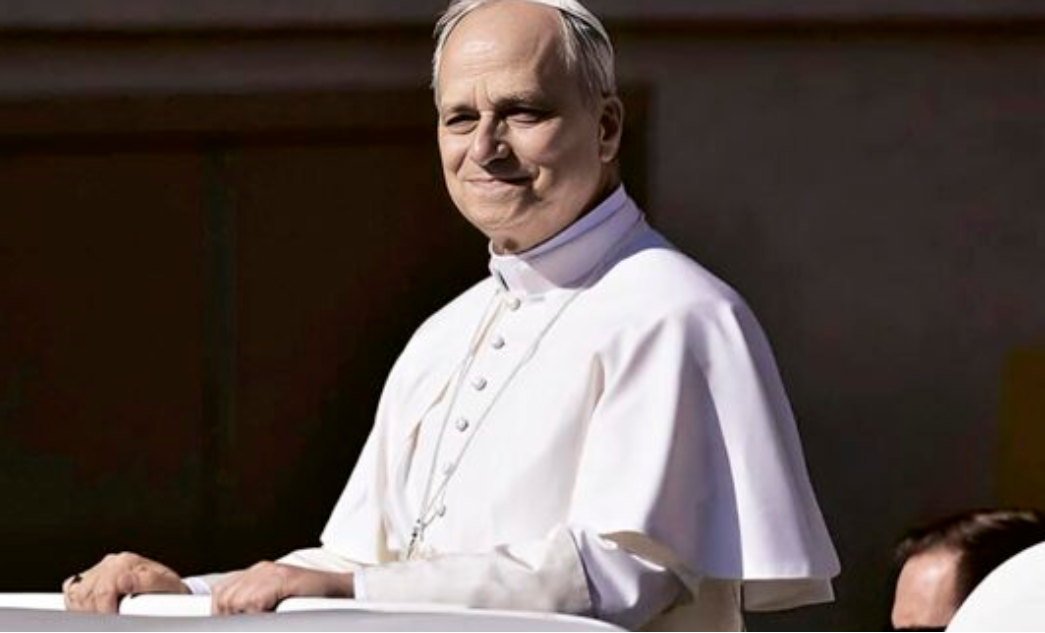

On May 8, 2025, history was made. For the first time, an American was elected Pope. But in his first speech, Pope Leo XIV did not mention his homeland, nor did he speak in his native English. Instead, after opening words in Italian and a closing prayer in Latin, the Chicago-born Pope spoke in Spanish. “También saludo,” was a very special greeting for Catholics in South America.
“Let me offer a greeting to my beloved diocese of Chiclayo in Peru, where a faithful people accompanied their archbishop and shared their faith,” said the Pope.
That improvised moment at the start of this first American pontificate was significant because Pope Leo is a baseball enthusiast who eats pizza and understands American culture, faith, and politics better than any other Pope in history.
However, you might need to travel elsewhere to get a fuller idea of who he is. This is Chiclayo in Peru, and, while it is miles away from Chicago and Rome, you cannot begin to understand who Pope Leo truly is without being on the ground here, in the place where he spent more time as a Church leader than anywhere else, as stated in a documentary produced by the Vatican.
Do you think of the Pope more as an American or more as a Peruvian? “He is more Peruvian. As he himself has said, he is more Peruvian than a potato,” a woman replies. “Peruvian, because he even has a national identity card.”
And they believe that Pope Leo’s experience in Peru is now leading him in Rome.
Ordained in 1982, Pope Leo XV has been a priest for 44 years, and, of those years, around 20 were spent in Peru. Known as the land of the Incas, Peru is a country larger than France and Spain combined. Its population of 35 million is the fourth largest in South America. The country is an interesting mix of contrasts: indigenous culture with Spanish colonial influence, Catholic roots with rising secularism, widespread poverty with coastal deserts, the Andes, and the Amazon rainforest.
For Pope Leo, his three missionary postings in Peru were far from the capital, Lima, in the north of the country. First, he served a year as a young missionary in the remote city of Chulucanas, and, some years later, in the port city of Trujillo for over a decade. Finally, about fifteen years later, Pope Leo returned to Peru as Archbishop of Chiclayo, where he served for nearly nine years.
How did someone born in Chiclayo end up in Peru in the first place? Midwest Augustinians established a missionary presence in northern Peru in the 1960s, and when the young Robert Prevost became an Augustinian priest in the 1980s, his canonical skills and aptitude for foreign languages were seen as valuable gifts for the missions.
Pope Leo’s first stop in Peru was in Chulucanas. The future pope arrived in this rural place, famous for its ceramics and agriculture. In 1985, he had just turned 30. But the situation in northern Peru was far from an easy assignment. Floods caused by the El Niño storm had devastated the region that year, while turmoil from the Maoist group “The Shining Path” plagued the Peruvian countryside.
Amid this crisis, Father Prevost immediately got to work. His administrative skills proved vital in bringing order to the vast church territory. But the young priest also had a special focus on serving local youth, keeping them out of trouble and guiding them in their relationship with God.
In the town square of Chulucanas, there are men who served as altar boys for Pope Leo forty years ago. They say the American missionary was different from other priests they knew.
“His example was very modest. For example, he would take a day off, disappear in the morning, and go to visit low-income people, very poor people. And he wouldn’t tell anyone. He wouldn’t tell anyone and would give them food,” said Martin Feijo, former altar server of Pope Leo
The future pope also used a creative strategy to keep young people out of trouble.
“Father Roberto would call us to meetings on Saturday evenings, but as young people, we wanted to go to the disco and do all those typical things for our age. But we wouldn’t go out anymore because we were staying with him,” he continues.
But that doesn’t mean the future pope was only about rules and no fun. He organized activities for the youth group, like sports tournaments and trips to the beach. And this former altar server recalls that, on one occasion, the young missionary took the group to a rock concert.
“And he joined in. He came and had fun with us. I mean, he took us to the concert and got tickets as a way to reward us for something we did. And he didn’t want to go, but we encouraged him, and he came with us and stayed for the concert,” says Rodolfo Yepez Castro, former altar server of Pope Leo.
But more than the fun outings, what former altar servers remember most about Pope Leo was his friendship and trust.
“When we had spiritual questions, he would analyze them and then give us the answer. He wasn’t the type of person who would say: no, not that, without taking the question seriously. Instead, he would slowly lead us to the answer. From that experience with Father Roberto, I wanted to become a priest. We all had that feeling,” says Fernando García, another former altar server for Pope Leo.
The same care for youth that energized the young missionary in Chulucanas reached new heights in his ministry as Pope. In August 2025, Pope Leo XIV appeared at the Youth Jubilee outside Rome.
“Dear young people, love one another. Love one another in Christ. Learn to see Christ in others. Friendship can truly change the world. Friendship is a path to peace,” said the Pope.
The Holy Father told the crowd of young people that, in the age of artificial intelligence, they must seek authentic relationships.
Pope Leo has an exceptionally positive aura. People who have lived with him, who have been close to him, feel it. Pope Leo is the godfather of Mildred Kamacho. Now in her twenties, Mildred Kamacho finds it a bit surreal that her godfather is now the Holy Father.
“I still can’t process it in my mind. He’s the same person I’ve admired since I was very young because my father instilled it in me, showed me, and taught me, and told me everything he did throughout his life. I still can’t believe that he is the Holy Father,” she says.
Catholicism in Peru was beginning to show signs of decline, but the young priest succeeded. His idea was to bring the Church to the people. Pope Leo was deeply shaped by his time in Peru: “I am definitely an American and feel very much that I am an American. But I also love Peru, the Peruvian people, very much. And so, that’s a part of who I am. I spent half of my priestly life in Peru. So, the Latin American perspective is very valuable to me, and I think it is reflected in my appreciation for the life of the Church from Latin America.”
Pope Leo says this perspective helped him connect with another Latin American Church leader, Pope Francis: “which I believe was important in both of us. My connection with Pope Francis, my understanding of some of the visions that Pope Francis had for the Church, and how, in some ways, at least, we can continue that.”
Pope Francis appointed him cardinal, paving the way to the papacy. As head of the universal Church, in his first year as pope, Pope Leo has visited distant places like Turkey and Lebanon and made an extended visit to the African continent. The Holy Father made unity in the Church the theme of his inaugural Mass, celebrated just ten days after he was elected pope.
“Brothers and sisters, I would like our first great desire to be for a unified Church and a community that ferments for a reconciled world,” he says.
Pope Leo has helped heal divisions in the Church by listening to and addressing groups that have felt excluded. The same quiet strength of the Pope has already appeared in his pontificate amid a very different confrontation.
“I’m not a big fan of Pope Leo,” were Trump’s words
Responding to President Donald Trump’s attack after the Pope’s calls to end the war in Iran, the American Pope answered with calm strength: “I am not afraid of the Trump administration nor of speaking out loudly for the message of the Gospel. And that is what I believe. I am called to do what the Church is called to do.”
Pope Leo is now the shepherd of the universal Church. He carries with him as Holy Father in Rome what he experienced in Chulucanas, Trujillo, and Chiclayo.
“Mission shapes us. It helps us understand how things are. It leads us to encounter God. It also makes us much freer people, able to serve others. And I think there’s also a little bit of Peru inside Pope Leo that has shaped him,” expresses a believer.
And Peruvian Catholics believe that the Holy Spirit helped the College of Cardinals do the right thing when they chose Cardinal Robert Prevost as Pope Leo XIV.
“And how wonderful, how beautiful. Let’s say it was our father, Roberto, who was chosen, a source of pride for all of us, as they say, a true Peruvian at heart. And on our part, we are proud that he began, started, and came to Peru. That is true. It was God’s will that this happened.”
“And forgive me for saying this, because I’m sure there must be many among these cardinals. There couldn’t have been a better choice than Father Roberto as His Holiness.”
They hope to see their dear friend, Pope Leo, again in Peru.