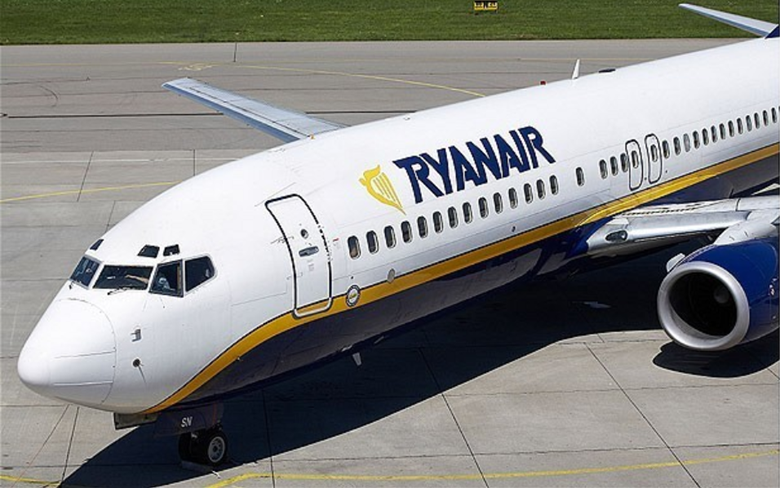
Airline Ryanair has prepared for the possibility of an “armageddon scenario” due to the ongoing jet fuel crisis, Chief Financial Officer Neil Sorahan told CNBC. The remarks came as the airline announced its full-year financial results, offering a rare glimpse into just how seriously European carriers are taking the worsening fuel situation.
“Do we have plans for some kind of armageddon scenario? Of course we do, but I don’t see that happening. Right now, we are operating a full schedule this summer and we plan to continue with a full schedule during the winter period as well,” Sorahan stated. He added that despite the turbulence in global energy markets, he is “increasingly confident” that there will be no supply shocks this summer.
The backdrop to these statements is the ongoing conflict with Iran and the continued closure of the Strait of Hormuz, a vital trade artery through which Gulf refineries previously supplied up to 65% of UK jet fuel.With that route cut off, Europe is in a race to find fuel elsewhere, from such sources as West Africa, Norway, and North and South America. Ryanair has also withdrawn its own full-year forecasts given the uncertainties of the war.
Ryanair’s strong position largely relies on the hedging arrangements that it put in place. The airline has hedged 80 percent of its summer fuel needs at $668 a metric ton and thereby protects itself from some of the huge price surges elsewhere in the industry. The group had net cash on its books of 2.1 billion at the end of March 2026 with 647 planes in its fleet: something most of its rivals lack.
While Ryanair appears well-positioned, Sorahan warned that the same cannot be said for all carriers. “I think we will see some of the weaker carriers, who were already facing difficulties before the war, possibly go bankrupt this winter,” he said. Ryanair CEO Michael O’Leary had previously echoed this view, warning that if high fuel prices persist through summer, “real failures” could occur among European airlines.
From a passenger perspective, demand remains solid but behaviour is shifting. Bookings are coming in closer to departure dates than usual, and some travellers are opting for rail travel or short-haul destinations, with Southern Europe remaining the most popular choice for summer holidays.