
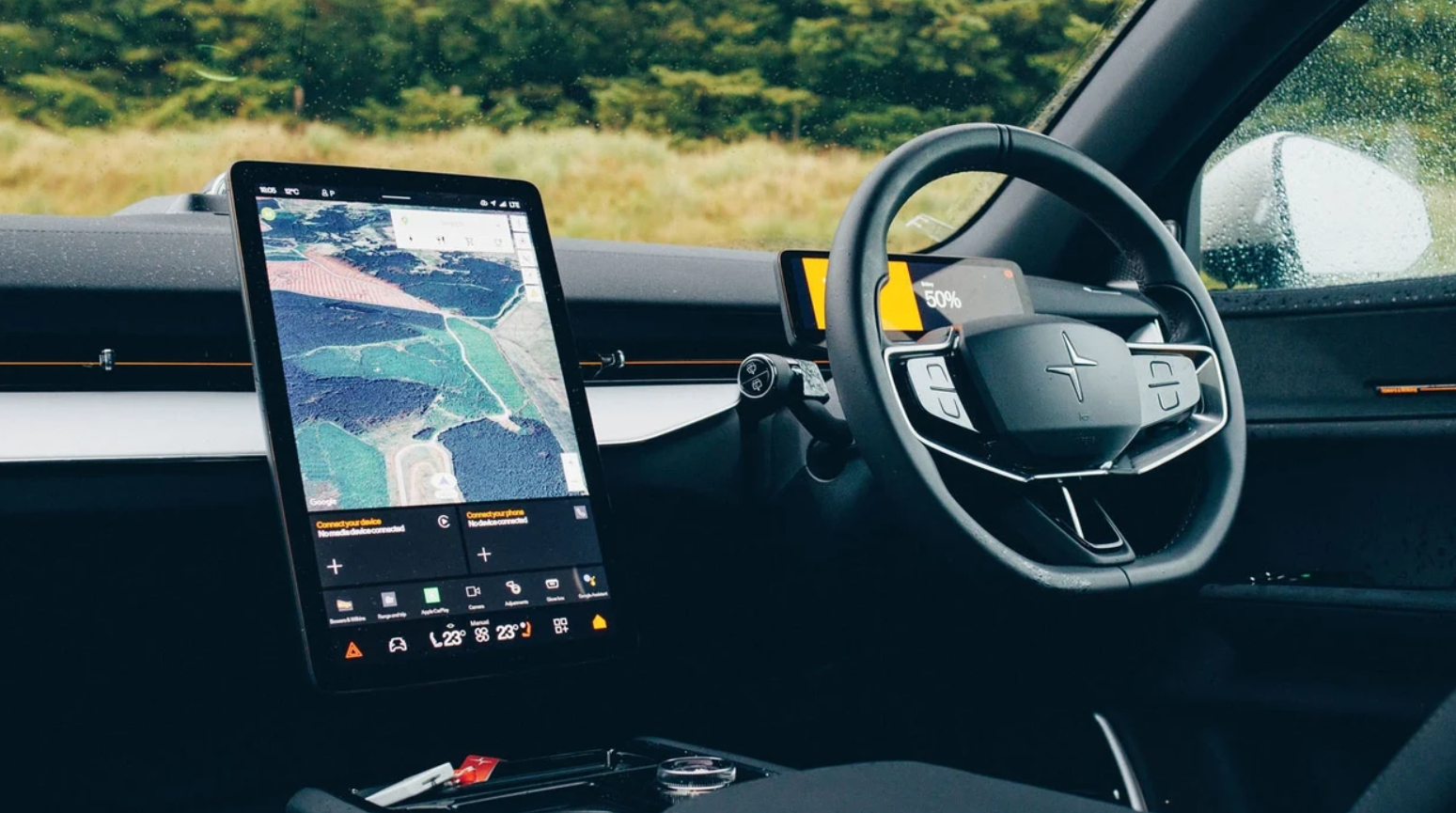

Drivers are clearly getting tired of touchscreen-only interiors, so it’s no surprise that manufacturers are starting to bring back physical controls. Polestar, the Swedish electric vehicle company whose brand was built around a minimalist interior – but who is now rethinking its strategy following direct customer feedback – is the latest to do so.
From its inception, the Polestar interior was exceptionally minimal. With the exception of a volume control, all functions were accessed via the central touchscreen. In the early days, it looked like a daring and innovative step; fitting the company’s sleek, minimalist brand, and perfectly complementing its “tech-forward EV” image. But time has told and the thing that looked amazing at the showroom level just didn’t translate to a positive ownership experience.
CEO of Polestar, Michael Lohscheller confirmed that it keeps a very close relationship with customers, and the feedback it is getting from them on the touchscreen-only cabin is remarkably straightforward and simple. Customers want more buttons. And in a beautifully refreshingly honest way, there’s no attempt by Lohscheller to try and sugar coat things; they’ve got customers telling them they want more buttons, so they are going to add more buttons.
“Customers are very open about touch controls. They say we want more buttons. It is that simple. And yes, we will make buttons” he said at the Polestar 2 press event in New York this week.
This move represents a huge trend that has been creeping into the car industry for years now. Car manufacturers have been aggressively phasing out physical controls, replacing them with large, glossy touch screens to look modern, cutting edge, and to tick the boxes as an advanced technology car, something pioneered by the Tesla’s minimalist interior and since followed by many other manufacturers aiming for a similar cutting-edge image.
But the day-to-day experience of using a touchscreen-only interior is less attractive than it first appears. Users have found it frustrating to navigate through endless menus just to adjust the climate, fan speed, or turn on seat heating, features which previously took a simple button press and didn’t require them to take their eyes off the road. It has also proven to be a major safety issue as touchscreen controls are incredibly distracting and require far more driver attention to operate safely than their physical counterparts.
In response to growing pressure from consumer groups and regulators in several countries, most of the automotive industry is now rethinking the deletion of physical controls. A number of markets have also started developing regulations governing the usability and accessibility of their vehicles’ internal controls.
The first evidence of Polestar changing direction will come in a refreshed version of its Polestar 3 due next year, which is expected to gain additional physical controls to improve ease of use and driver safety by reducing reliance on the central touch screen for primary functions.
This is a most welcome and overdue change, and a clear indication that the EV market is growing up and understanding that user experience truly matters.