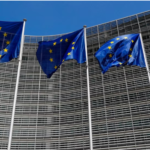
The European Commission has warned that the status quo for trade and investment relations between the EU and China is “not sustainable,” and that the bloc requires a more “unified and coordinated approach” given rising economic and security concerns about the country.
The assessment was revealed immediately following a dedicated College of European Commissioners meeting on the bloc’s ties with China, underscoring the topic’s growing prominence on Brussels’ political agenda.
Brussels maintained its existing policy of “de-risking, not decoupling” from China in the statement, emphasizing that Beijing will continue to be seen as a “key partner with whom the EU continues to cooperate and engage.” European officials have sought to position themselves as more nuanced than Washington in their approach, which does not involve seeking a complete severing of economic ties, but a reduction of dependency.
However, the institution candidly acknowledged growing tensions in the EU-China relationship. “The current state of trade and investment relations is not sustainable. As economic and security interests become increasingly intertwined, both dimensions will require a stronger and more coordinated approach,” the Commission statement read.
The outcomes of the meeting will now be used as the foundation for a greater deal of activity in the coming weeks, including anticipated discussions at the G7 Summit in France and the European Council meeting in June, two key high-profile forums where the matter is expected to be prominently discussed.
The statement indicates an evolution of tone within the EU over the last several years. While Europe’s economic reliance on China, its biggest goods trading partner, remains extremely high, Brussels has become increasingly wary of the imbalanced nature of the trading relationship. The EU already has a significant trade deficit with China and has long been vocal about issues including lack of market access, distortions from state subsidies, and discriminatory technology transfer policies for European companies.
In recent years, a number of concrete measures have been introduced by the EU to address concerns. The process included subsidy investigations on Chinese EVs, solar panels, and wind turbines. The EU imposed tariffs on Chinese electric vehicles in 2024 after determining by the Commission that they were being manufactured with state subsidies, even though China had threatened retaliation on European products such as wine, dairy and aircraft.
The EU has also sought to decrease its dependence on Chinese supply chains in a range of areas deemed as strategically sensitive-ranging from critical raw materials and semiconductors to batteries and medical equipment. Concerns are not merely economic, but also geostrategic; the war in Ukraine proved the danger of reliance on a single country for essential goods, and Europe is unwilling to repeat that scenario with China.
European policymakers face the delicate task of carefully navigating the fine line between maintaining sufficient economic ties with China so as to avoid a debilitating rupture, and developing sufficient resilience to prevent themselves from becoming reliant on Beijing’s supply chains or subject to its political pressures. With two significant high-profile summits looming in the immediate future, the coming weeks will be a key test of whether member states can unite behind the Commission’s strong language and adopt a cohesive strategy.