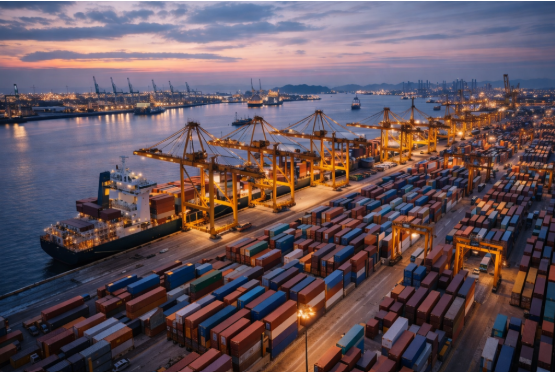

While the world’s attention has been fixed on the sweeping tariff increases introduced by the United States over the past year, a new report from the United Nations warns that the real and growing threat to global trade lies elsewhere — in the complex web of non-tariff measures that now impose higher costs on exporters than traditional customs duties.
As documented in UNCTAD’s May 2026 Global Trade Update, non-tariff measures such as technical regulations, sanitary and phytosanitary requirements, and administrative procedures have become the leading source of trade costs world-wide with more exports burdened by non-tariff costs than tariff costs in 88 percent of countries. (International Monetary Fund)
Tariffs did increase sharply in 2025 — rising by 10 percent for developed countries, 16 percent for developing countries, and 18 percent for least developed countries. For regions such as South Asia and Latin America, tariffs on exports nearly doubled. Meanwhile, least developed countries lose approximately 10 percent of their exports to G20 markets simply because they cannot meet the complex regulatory requirements imposed by wealthier nations. (International Monetary Fund)
The findings arrive at a particularly turbulent moment for the global economy. The IMF projected at the start of 2026 that global growth would hold steady at 3.3 percent, an upward revision driven largely by resilience in the United States and China, as the global economy showed a remarkable ability to shake off the immediate impact of the tariff shock. However, economists warn that the longer-term structural costs of rising trade barriers are yet to ripple through supply chains and reach the statistics governing growth (PBS).
The burden of both increased tariffs and increased regulatory compliance is an extremely challenging hurdle for developing economies, and threatens to create an even wider division between rich and poor nations, in a time when it is most vital to co-operate. International trade experts are calling for the simplification of regulatory standards and increased mutual recognition of compliance framework within the G20 nations, as a priority.